Why centralize price monitoring?
Manual price comparison quickly loses the plot: too many tabs, too little context, too few look at price history. Central price observation solves that chaos, and makes buying decisions data-driven instead of accidental.
Why you should organize price monitoring centrally
Prices do not live in one shop. The same item often moves at different levels on Amazon, Back Market, Refurbed, or eBay, sometimes offset in time, sometimes for only a few hours. If you check each retailer separately, you never see the full picture.
Central price organization bundles observation, comparison, and history. Instead of scattered bookmarks, you get a price workflow: Which offer is cheaper today? Has the price moved since last week? Is it above or below the usual level in historical context?
The problems with manual price comparison
- Tab chaos: Every shop is its own page, no shared comparison at the same moment.
- No history: You remember today’s price but lose how it moved over recent weeks.
- Different reaction times: Shops do not cut prices in sync; checking one retailer means missing moves elsewhere.
- Fake discounts: Without historical price analysis, percentage badges look convincing even when the price is expensive in context.
Manual comparison works for a one-off purchase. For anything where prices swing regularly, smartphones, refurbished devices, electronics, it is rarely enough.
How a price dashboard saves time
For volatile products, prices often change daily or weekly. A dashboard does not replace market logic, but it replaces repeated manual checks: current prices, recent moves, and set thresholds in one place, instead of opening the same pages five times a day.
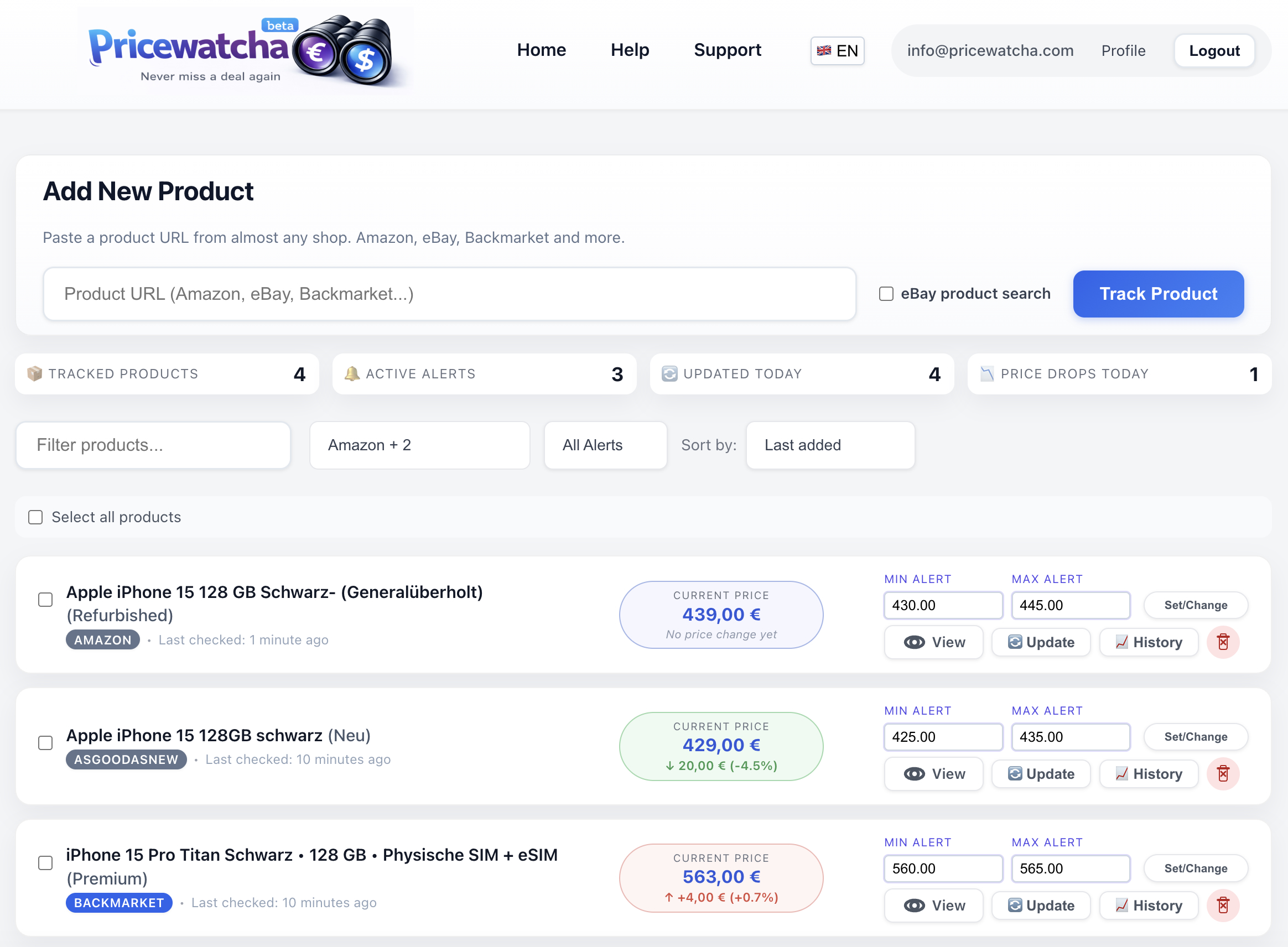
Workflow over one-off checks: If you track three iPhone listings across two shops, central overview saves clicks and reduces mistakes because comparison happens at the same time, not days apart.
Price histories, shops, and alerts in one place
Useful price monitoring connects three layers: the moment (current price), the history (price trends over weeks and months), and the response (price alerts when a target is reached).
- Multiple shops: Watch platforms in parallel instead of each retailer in isolation.
- Price histories: See whether a price is falling, stable, or spiking before promotions.
- Alerts: Act when a threshold is hit, not only on your next random visit.
Scattered observation becomes a continuous price workflow, from watchlist to buying decision.
Why price history matters
A cheap price today can be expensive again tomorrow, or never have been cheap compared with historical price data from recent months. Without history, context is missing: Is the offer near a low? Above average?
Tracking prices over time means comparing not only shops but also time periods. More on patterns, volatility, and timing in smart price analysis.
Example: tracking several iPhone offers at once
A typical scenario: you want an iPhone 15 Pro, new or refurbished, from different sellers, sometimes with different condition grades.
Without central overview: Three tabs, three different prices, no shared history. You see €899 at seller A and €849 at seller B, but you do not know whether B was €799 yesterday or whether A regularly dips lower during sale periods.
With central monitoring: All listings in one watchlist, moves in parallel, histories comparable. You see which seller sits below its usual level right now, and whether refurbished (buy a refurbished iPhone) looks more attractive than new prices.
Which products are especially suited to price tracking
- Smartphones and tablets: High volatility, release cycles, strong refurbished markets.
- Refurbished electronics: Prices swing by grade and seller, comparison pays off most here.
- Competitive electronics: Multiple platforms, frequent promotions, different reaction speeds.
- Larger purchases: Where a €50 to 100 difference is worth the effort, and prices should be watched over weeks.
The more volatile the market, the more tracking prices over time beats a single check on purchase day.
Common questions about price monitoring
Why is a single shop not enough?
Because prices react differently per shop: stock, promotions, and refurbished listings vary. One shop shows only a slice, central monitoring across retailers delivers the comparison manual tabs rarely keep consistent.
How often do prices change?
For electronics and refurbished devices, prices can move daily or weekly, sometimes only briefly. If you do not compare regularly, you miss lows and overestimate discounts without historical context.
Why is tracking prices over time worth it?
Because the current price alone says little. Price histories show whether an offer is cheap over time, how often the price dropped, and whether a discount really sits below the usual level.
Which products are best for price tracking?
Especially products with high volatility: smartphones, refurbished devices, electronics, and items with strong competition between platforms. The more prices swing, the more central observation beats one-off checks.
How do you spot good deals?
By comparing current prices with historical data: near a low, below average, consistent across shops, not only from a one-day percentage badge.
Price information and availability may change. The merchant's price is always authoritative.
Start tracking prices with Pricewatcha
Create a free account, add your first product link and monitor prices across shops with alerts and price history.